Guides
The startup budget for a voiceover business and the ways to finance it
A voiceover startup budget runs from booth treatment and a broadcast microphone to demos, casting profiles and union dues, financed by savings or loans.
What to take away
- A booth that passes a client's ear test typically starts near $250 for a microphone, an interface and basic treatment.
- Year-one startup with one demo reel usually lands between $600 and $3,300.
- Recurring costs run roughly $100 to $250 a month before the first booking.
- Equipment leasing, an SBA microloan and a presold retainer are the three routes that fit narrators.
- Break-even is fixed monthly cost divided by average profit per job.
The gear line is smaller than most people fear
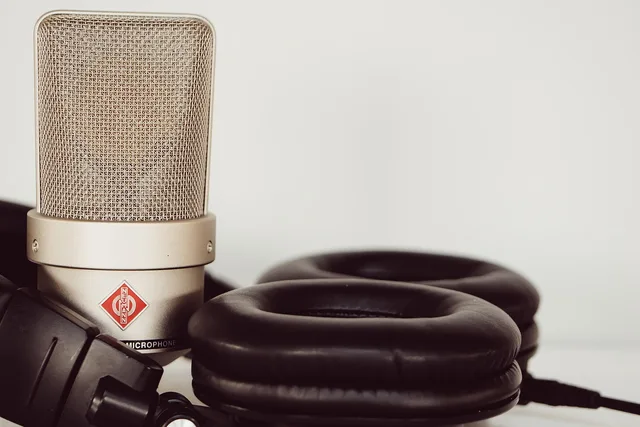
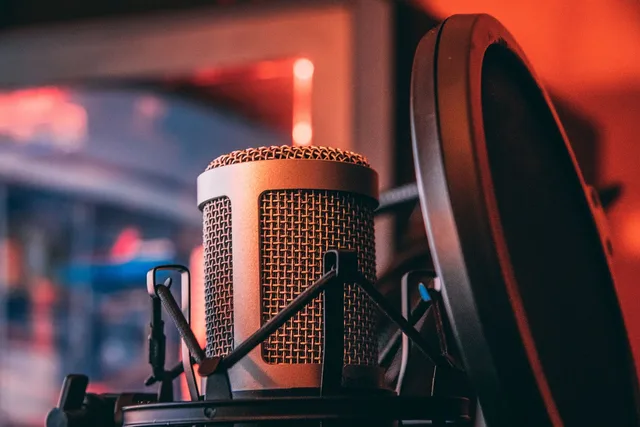
Three purchases carry the sound. A broadcast dynamic or large-diaphragm condenser microphone typically costs $100 to $400. An interface with a clean preamp runs $100 to $300. Treatment means foam panels, a reflection filter and a heavy blanket over a closet door, and it costs $50 to $300.
Software is the second line. Reaper's personal license is the cheapest credible DAW, and Audacity is free. Adobe Audition bills monthly. Add a punch-and-roll editor only if you narrate long-form audiobooks.
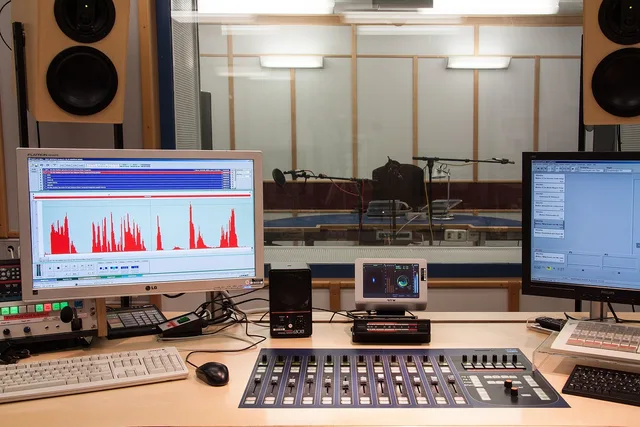
Genre changes the room more than the gear. The voiceover startup and market guide splits the categories by genre, because an audiobook narrator and a commercial reader need different spaces.
Year-one startup budget at three spending levels
Year-one startup budget
Low
- Microphone
- $100
- Interface
- $100
- Booth treatment
- $50
- DAW
- $0
- Headphones, stand, cables
- $50
- Website and hosting
- $0
- One demo reel
- $300
- Year-one total
- $600
Mid
- Microphone
- $250
- Interface
- $200
- Booth treatment
- $150
- DAW
- $60
- Headphones, stand, cables
- $100
- Website and hosting
- $100
- One demo reel
- $700
- Year-one total
- $1,560
High
- Microphone
- $400
- Interface
- $300
- Booth treatment
- $400
- DAW
- $240
- Headphones, stand, cables
- $200
- Website and hosting
- $250
- One demo reel
- $1,500
- Year-one total
- $3,290
The table leaves out insurance, union dues and tax preparation, because those bill every year rather than once. Add the recurring lines below for a true first-year figure.
Recurring costs bill whether you book or not
Recurring costs
| Line | Typical annual cost | Billing |
|---|---|---|
| Casting membership | $200 to $500 | Monthly or annual |
| Additional demo reel | $300 to $1,500 | One time |
| Liability insurance | $400 to $800 | Annual |
| Accounting and tax prep | $300 to $900 | Seasonal |
| Website, hosting, email | $100 to $250 | Annual |
Casting memberships at Voices.com, Voice123 and Backstage bill monthly whether or not you book, so treat them as rent. Payout rules decide what those memberships are worth, and voiceover platform fees covers the parts that change your take-home.
A demo is not one reel. Agents expect separate reels for commercial, narration, e-learning and animation, and each one is a produced piece.
SAG-AFTRA sets session minimums and takes working dues as a percentage of covered earnings, as the union overview describes. Initiation fees and dues change, so verify current figures before you budget them.
A closet used only for recording can qualify for the home office deduction, which IRS Publication 587 explains.
Rerecords after approval are the quiet cost. A client approves a read, the script changes, and the second session goes unbilled unless your quote says otherwise. Put the revision policy in the quote, not the invoice.
A streaming subscription does not license a track for a client's ad. Sync rights and master rights are separate purchases.
The voiceover production workflow shows where those extra passes enter a job, which is where you price for them.
Financing routes compared on total cost
- Cash from a day job. Cheapest and slowest. Fund the booth first, then one casting membership. No interest and no paperwork.
- Equipment leasing. A $1,000 gear bundle financed over 24 months at a typical 12 to 18 percent annual rate costs about $1,150 to $1,200 in total payments, so roughly $150 to $200 in finance charges. Ask for the total, not the monthly figure.
- SBA microloan. The SBA's business guide covers lender matching. These loans commonly cap at $50,000 and run to six years. Lenders usually want a personal guarantee, a credit check, a written plan and either a year of bookings or a signed retainer.
- Presold retainer. Two or three clients on a monthly narration retainer convert variable income into a floor. It is the only route that also grows revenue.
Only the retainer improves your position with a lender. It is the documentation that makes the other three cheaper or unnecessary.
Example: break-even for a first-year narrator
Break-even is fixed monthly cost divided by average profit per job. Use the recurring lines from your own table above, not the one-time gear.
Assume fixed costs of $240 a month. That is $35 for a casting membership, $45 insurance, $10 hosting, $15 software and $135 as the monthly average for demo replacement and accounting.
Assume an average booked job nets $160 after platform commission. Break-even is 240 divided by 160, which is 1.5, so two bookings a month cover the floor.
Add a third casting membership at $40 and fixed costs reach $280. Break-even becomes 1.75 jobs, still two bookings but with no slack for a slow month.
The voiceover business plan turns those lines into a forecast, which is the document a lender or a lease company actually reads.