Guides
Voiceover business plan: four inputs to map
A voiceover business plan maps rates, booth capacity, fixed costs, seasonal gaps, booking deductions and job records into a working operating plan.
What to take away
- A voiceover plan is a rate card plus a calendar plus a reserve, not a document about your voice.
- Price per finished minute, not per hour in the booth. Editing, pickups and mastering are inside that minute.
- Casting-site commissions and agent percentages come off the top, so a $300 booking is not $300.
- Advertising cycles and audiobook seasons decide when the work lands, so the reserve has to cover the gaps between them.
- Keep every session file, usage term and rerecord request in one place; that record is what your CPA and your attorney will ask for.
This article covers business operations for independent narrators. It is not legal, tax, union or medical advice. Contract and buyout terms belong with an entertainment or intellectual-property attorney, filing positions with a CPA who knows Schedule C, and union signatory questions with SAG-AFTRA's contracts department.
The plan below is a method for your own figures. PFM rates, per-word rates and commissions move with genre, market and each platform's current terms, so the plan shows where each figure goes and anchors it with two official numbers: federal wage data for actors and the self-employment tax rate.
What the plan actually has to contain
Four planning inputs shape whether a narrator's business can hold up: the rate per finished minute, weekly finished-minute capacity, fixed monthly cost, and unbooked weeks in a year.
Four numbers that decide the business
- Pricefinished minute sells for
- Capacityfinished minutes per week
- Fixed costmonthly commitments
- Riskweeks a year with no bookings
Everything else in the plan exists to defend those four. A demo reel, a website and a client list are evidence for the rate card. They are not the plan.
Write the rate card first. Per finished minute (PFM) and per word are the two structures most narration buyers use. Pick one as your standard and convert the other at your own measured pace, so a 90,000-word audiobook does not get quoted at a rate you invented on the call.
For an outside check on the hourly value behind that rate, the Bureau of Labor Statistics' May 2023 estimates for actors, who play parts in radio, stage, television, video or film productions, put the median hourly wage at $20.50 and the mean at $41.01, with the 10th percentile at $13.00 and the 90th at $100.01. These are hourly wage estimates, not narration rates per finished minute. Divide your PFM rate by the booth, editing and admin hours one finished minute really takes, and compare the result with that range.
Booth, interface and the cost you forget
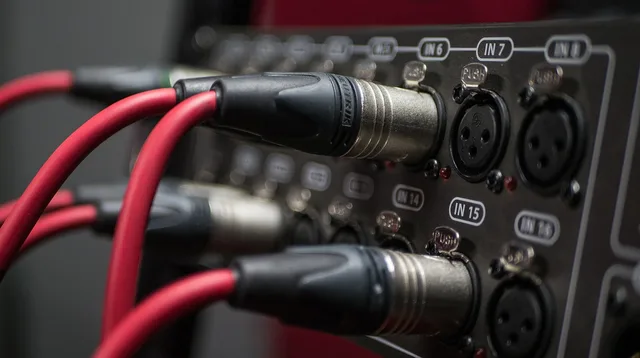
The booth and microphone are the visible spend. The recurring cost is the quiet one: interface, DAW licence, storage, backup, and the hours of editing that never appear on an invoice.
One-time vs recurring booth costs
One-time
- Microphone
- bought once
- Booth treatment
- visible spend
- Interface
- no
- DAW licence
- no
- Storage and backup
- no
- Casting subscription
- no
Monthly
- Microphone
- no
- Booth treatment
- no
- Interface
- recurring
- DAW licence
- recurring
- Storage and backup
- recurring
- Casting subscription
- renews anyway
List one-time costs separately from monthly commitments. A microphone is bought once. A casting-site subscription renews whether or not you book.
Then add the cost nobody budgets: rerecords. A client who approves a read and then changes the script has spent your booth time twice. Decide in advance how many rounds of revision sit inside your rate and what a further round costs.
Rate cards, commissions and what reaches you
A booking price is not a payment. Casting platforms take a commission, agents take a percentage, and payment terms decide when the rest arrives. Model the net, not the gross.
Tax comes off that net too. A self-employed narrator owes self-employment tax, which the IRS sets at 15.3%: 12.4% for Social Security and 2.9% for Medicare, on top of income tax. Put a set-aside line for it against every payment, and let a CPA confirm the earnings it applies to.
Name the channels in the plan, because each one has its own terms to read. Voices.com, founded in 2003 and headquartered in London, Ontario, is a job search website for voice actors and the employers who hire them. For audiobooks, the Audiobook Creation Exchange (ACX), launched by Audible in 2011, is a marketplace where narrators, authors, agents, publishers and rights holders connect to create audiobooks, and titles produced through it are sold on Audible.com, Amazon.com and iTunes. Put each channel you use on its own line, with its current fee terms copied from its own site on the day you write the plan.
Rate structures and what to watch
Structure
- Per finished minute
- corporate, e-learning
- Per word
- audiobook, long-form
- Royalty share
- paid from sales
- Buyout
- one fee, client keeps
- Union session
- scale plus pension
Watch
- Per finished minute
- revision rounds
- Per word
- proofing extra
- Royalty share
- no floor
- Buyout
- term, media, territory
- Union session
- signatory status
Rate cards, commissions
| Line | What it does | What to watch |
|---|---|---|
| Per finished minute (PFM) | Standard for corporate, e-learning and explainer work | Defines revision rounds and delivery format |
| Per word | Common for audiobook and long-form narration | Proofing and pickup passes are usually extra |
| Royalty share | Narrator is paid from audiobook sales instead of upfront | No floor; a slow title pays nothing |
| Buyout | One fee, client keeps the recording | Term, media and territory decide whether the fee is fair |
| Union session | Scale rate plus pension and health contributions | Signatory status and eligibility are the union's call |
Two structures deserve a second look before you sign anything. Royalty share trades certainty for upside, and it only works on titles with a real marketing budget behind them. A buyout looks simple until the client runs the same read in a second medium for a decade. Ask an entertainment attorney what the term actually covers.
When the work arrives, and when it does not
Voiceover demand is seasonal in ways that have nothing to do with your calendar. Advertising cycles cluster around upfront buying periods and the run-up to the winter holidays. Corporate e-learning peaks when budgets reset. Audiobook production follows publisher release schedules, which bunch into a few heavy months.
When voiceover demand peaks
- Upfront buyingadvertising work clusters
- Winter holidaysadvertising run-up
- Budget resetcorporate e-learning peaks
- Publisher schedulesaudiobook months bunch
That pattern sets your reserve target. Take your committed monthly cost, multiply by the number of consecutive slow weeks you have actually measured, and that is the floor the reserve has to clear. If you have not measured a slow season yet, use the arithmetic and revise it after your first full year.
Auditions, agents and the ratio that tells the truth
Track your audition-to-booking ratio from the first month. It converts effort into a number, and the number tells you whether the problem is your read, your demo or your targeting.
Audition-to-booking ratio
Track from month one
Converts effort into a number
Tells you: read, demo or targeting
Repeat-client share is the second number
Submission etiquette matters more than volume. Casting directors and agents work from shortlists, and a narrator who submits to everything they are wrong for stops being shortlisted. Segment the demo reel by genre so a casting director hears the relevant thirty seconds first.
Repeat-client share is the other number worth watching. A narrator whose work comes mostly from returning producers has a different business from one who auditions constantly, and the two need different plans.
The records that make the plan checkable
Keep the session file, the script version, the usage terms and the invoice together for every job. When a client asks for a rerecord two years later, that folder is the difference between a paid session and a favour.
For the administrative side, the U.S. SBA Business Guide covers planning, launch, management, and growth activities, including market research, startup costs, permits, insurance, and finance.
Internal Revenue Service: Starting a business covers structure choice, tax identification, business taxes and recordkeeping from the first day. Take the specifics to a CPA.
U.S. Copyright Office: Copyright and the Music Marketplace explains that public performance and other music uses travel through different rights and licensing paths. A narrator who adds music or a bed under a read should not assume a streaming subscription covers the use.
First-year operating scenario
A narrator leaves a staff job with a treated closet, one large-diaphragm microphone and an interface. The voiceover business plan they write sets a PFM rate, a weekly finished-minute ceiling of ten, and a fixed monthly cost covering subscription, software, storage and insurance.
Casting sites bring two corporate explainers a month. An agent adds one audiobook in the spring. The advertising cycle fills November and goes quiet in January, and the January gap is what the reserve was for.
The rerecord request arrives in February, on a job approved in December. Because the rate card named two revision rounds and the folder held the approved script, the third round is a paid session rather than an argument.
Should a new narrator quote per finished minute or per word?
Per finished minute is easier to defend on corporate and e-learning work, because the client is buying a deliverable rather than a script length. Per word suits audiobooks, where the length is fixed before you start. Pick one as standard and convert the other at your measured pace.
How much of a booking actually reaches the narrator?
Less than the quoted price. Platform commission, agent percentage and payment terms all come off before the money lands, and a royalty-share title may pay nothing at all. Model the net figure when you build the rate card, not after the invoice clears.
What belongs in the reserve?
Committed monthly cost multiplied by the number of consecutive slow weeks you have measured. Advertising cycles and publisher release schedules create those gaps, so the reserve is a seasonal buffer rather than a general emergency fund.
Does a buyout mean the client owns the recording forever?
That depends entirely on the term, media and territory written into the agreement. A buyout can be narrow or broad, and the difference changes what the fee should be. Have an entertainment or intellectual-property attorney read the terms before you sign.