Guides
Starting a voiceover business: the market and the first moves
A voiceover business starts with a treated recording space, a clean signal chain, and rate terms agreed before the first script is read aloud.
What to take away
- Starting a voiceover business begins with a booth, not a microphone. A closet of moving blankets beats a $1,000 condenser in a live room.
- Rates are quoted per finished minute or per word, never per hour. Hourly billing punishes you for getting faster.
- Audiobook work pays either per finished hour or a royalty share. ACX uses both models, and the two have different cash timing.
- Union and non-union jobs carry different terms. SAG-AFTRA signatory questions go to the union's contracts department, not to a forum.
- Your audition-to-booking ratio tells you whether the demo or the marketing is the problem. Track it monthly.
Voiceover work is a service business with a manufacturing problem inside it. A client buys a finished WAV or MP3, not the hours you spent in the booth. Everything below is about getting that file made reliably and getting paid for it.
Build the room before the rack: Shure SM7B, Focusrite Scarlett, Reaper
The room is the product. A condenser microphone in an untreated spare bedroom picks up the refrigerator, the street, and the reflection off bare walls. Moving blankets, a closet, or a purpose-built booth solve that before any gear upgrade will.
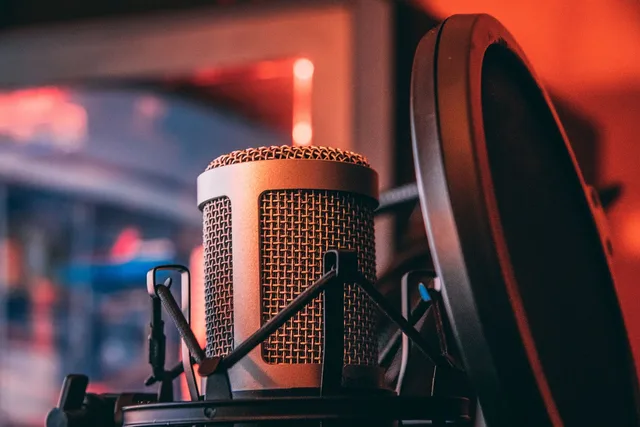
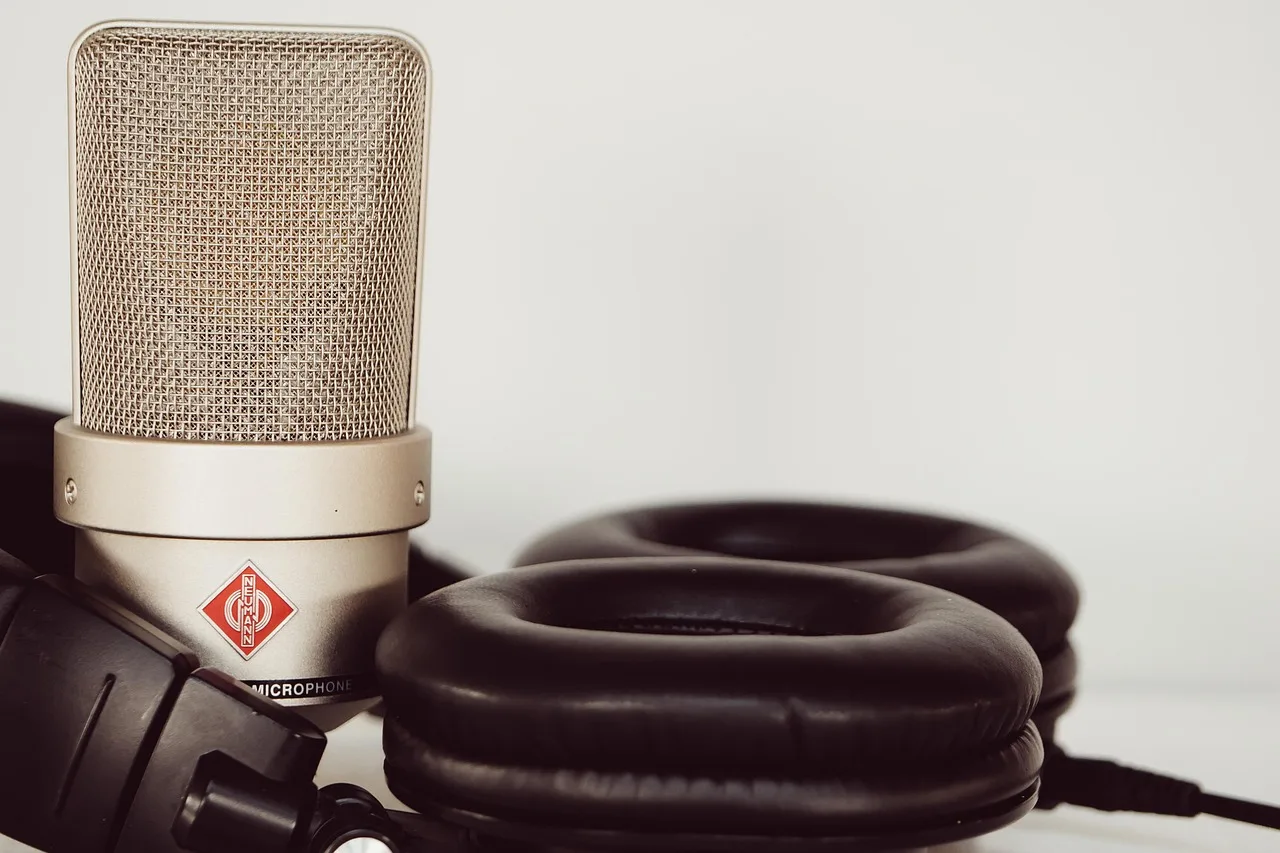
Signal chain runs microphone, preamp or interface, computer, editing software. A Shure SM7B dynamic microphone, list price around $399, into a Focusrite Scarlett Solo, around $120 to $200, in a quiet, treated room outperforms a Neumann TLM 103 condenser, around $1,200, in a noisy one.
Buy the room first, the interface second, the microphone third.
Editing software is where the labor hides. Reaper lists a discounted license at $60 and a commercial license at $225. Adobe Audition runs about $22.99 a month. Pro Tools Artist lists at about $99 a year.
All handle narration, noise reduction, and file delivery. Knowing one well enough to cut breaths and mouth noise without re-recording matters more than the choice.
Voiceover market: Voices.com, Voice123, ACX, and Casting Call Club
Voiceover splits into genres that barely overlap. These include:
Voiceover market
- commercial
- narration and e-learning
- audiobooks
- animation and video games
- IVR and phone prompts
- dubbing
Each has its own buyers, audition process, and rate card. Pick two to start.
Buyers are producers, casting directors, agents, and increasingly the client directly. Producers and casting directors run sessions and send you the script. Agents submit you for work and take a commission on what you book.
Buchwald, CESD Talent Agency, Atlas Talent Agency, and DPN Talent are established agencies that represent voice actors. SAG-AFTRA franchised agents typically take 10 percent commission on union bookings. Direct clients found through your own marketing pay no commission and take the most explaining.
Auditions are the marketing. Voices.com and Voice123 charge paid memberships, often $300 to $500 a year, and let you submit to posted jobs. Casting Call Club has free and paid tiers for fan projects and indie work. Your audition-to-booking ratio, tracked monthly, tells you whether the problem is your demo, your genre selection, or your submission volume.
Rate cards: per finished minute, per word, and audiobook royalty share
Quotes are per finished minute or per word. Union commercial work is priced by session fee plus usage, where the usage fee depends on market, media, term, and exclusivity.
A SAG-AFTRA commercial session fee typically starts around $250 to $300 before usage, with national campaigns running much higher. Non-union commercial work often runs $150 to $500 for local or regional use. National non-union buys can pass $1,000. E-learning and narration often quote $50 to $150 per finished minute.
Audiobooks are the clearest split. ACX, the Amazon-owned Audiobook Creation Exchange, connects narrators with authors and publishers. Per-finished-hour work pays a flat rate for each hour of completed audio, and a finished hour typically represents several hours of recording and editing.
New narrators often see $100 to $250 per finished hour; experienced narrators can quote $250 to $500 or more. Royalty share pays nothing up front and a percentage of sales instead. Royalty share is a bet; per-finished-hour is a wage.
Work-for-hire and buyout language determines whether you keep any rights to the recording. Do not interpret or sign those terms on your own. Take them to an entertainment or intellectual-property attorney in your jurisdiction.
Where the paperwork lives: LLC filing, Schedule C, and IRS links
An LLC registration fee, a business bank account, and a separate card for gear are the ordinary starting structure. State LLC filing fees commonly run $50 to $500, and some states add annual report fees. Entity choice and registration rules vary by state, so confirm the current fee and filing requirement with your own state's business authority.
Tax mechanics follow the same pattern. Income and expenses land on Schedule C for a sole proprietor, and quarterly estimated payments replace withholding. Ask a CPA who works with performers how to set the reserve aside. This article does not give filing positions.
Two public references are worth reading in full before you spend anything. The SBA business guide walks through planning, launch, and startup costs. The IRS page on starting a business covers structure, tax IDs, and recordkeeping from day one.
Music and performance rights are a separate layer again. The U.S. Copyright Office's Copyright and the Music Marketplace explains that public performance and other uses can run through different rights and licensing paths. A production that licenses a track for one use does not automatically cover the next.
SAG-AFTRA union work
SAG-AFTRA covers a large share of commercial, animation, and game work. Signatory status, Taft-Hartley eligibility, and the obligations that come with a union contract are set by the union, not by the client and not by this article. Contact the union's contracts department directly before you accept a union job.
A worked example: e-learning and audiobook rates
A narrator sets up a treated closet, a dynamic microphone, and Reaper. She picks e-learning and audiobooks, submits to twenty auditions a week, and books two. Her rate is $200 to $350 per finished hour for audiobooks and $50 to $150 per finished minute for e-learning.
Month three, the audiobook client offers royalty share instead of per-finished-hour. She runs the arithmetic: royalty share pays nothing until sales arrive, so she needs enough per-finished-hour work to cover rent while the royalty title sells or does not.
That is the whole decision. Keep the voiceover business plan current as the mix shifts, and price every job to survive the long ones.
Common questions
How much does it cost to start?
It depends almost entirely on the room. A treated closet with moving blankets, a Shure SM7B, a Focusrite Scarlett Solo, and Reaper can cost roughly $600 to $900. A purpose-built booth can run $1,500 to $5,000 or more.
Add a state LLC filing fee, often $50 to $500, and a separate business account. The room drives the range more than the microphone.
Do I need an agent to get work?
No. Voices.com, Voice123, Casting Call Club, direct outreach, and repeat clients from past sessions all produce bookings without one. SAG-AFTRA franchised agents typically take 10 percent commission and help most once you have a demo and a genre focus worth submitting.
How long before the business pays for itself?
Track two numbers monthly: your audition-to-booking ratio and your effective hourly rate after editing. A ratio around 1 booking per 20 to 30 auditions is common at the start, though genre and platform change it. When the effective hourly rate clears your costs and your reserve, the business is working.