Guides
Voiceover production setup: the practical version
A voiceover production setup is a microphone, an interface, a treated space, a DAW, and a repeatable signal chain you can trust take after take.
What to take away
- A voiceover production setup is a large-diaphragm cardioid condenser on a boom arm, a two-input USB interface, closed-back headphones, and a pop filter. Those four cover most narration work.
- One dynamic or USB microphone can carry a demo. Commercial and audiobook clients expect a clean, low-noise chain you can repeat.
- Reaper, Adobe Audition, Audacity, and Twisted Wave are the DAWs narrators invoice from. Pick one and learn its punch-and-roll.
- Room treatment beats microphone upgrades. Moving blankets and bass traps remove the boxy reflection a client hears before they hear your voice.
- Deliver 24-bit WAV at the sample rate the client specifies, raw and processed, with room tone at both ends.
- A first setup typically runs $550 to $1,200 before room treatment.
Scope and legal note:
- This article covers general voiceover-business practice, not individualized legal advice. It does not cover copyright, performer rights, publicity rights, or synthetic voice. It does not cover union rules, usage, or advertising terms. Privacy, tax, employment, and contract questions are also outside its scope.
- Rights and rates depend on the script, market, media, and territory. They also depend on term, exclusivity, reuse, and performer status. Define usage in writing and seek qualified guidance.
- Union work runs on SAG-AFTRA rate sheets, which set minimums by category and market.
The booth comes before the microphone
A closet packed with clothes, a corner draped in moving blankets, or a purpose-built booth all beat an untreated spare bedroom. Parallel walls and a hard floor bounce your voice back into the microphone a few milliseconds late.
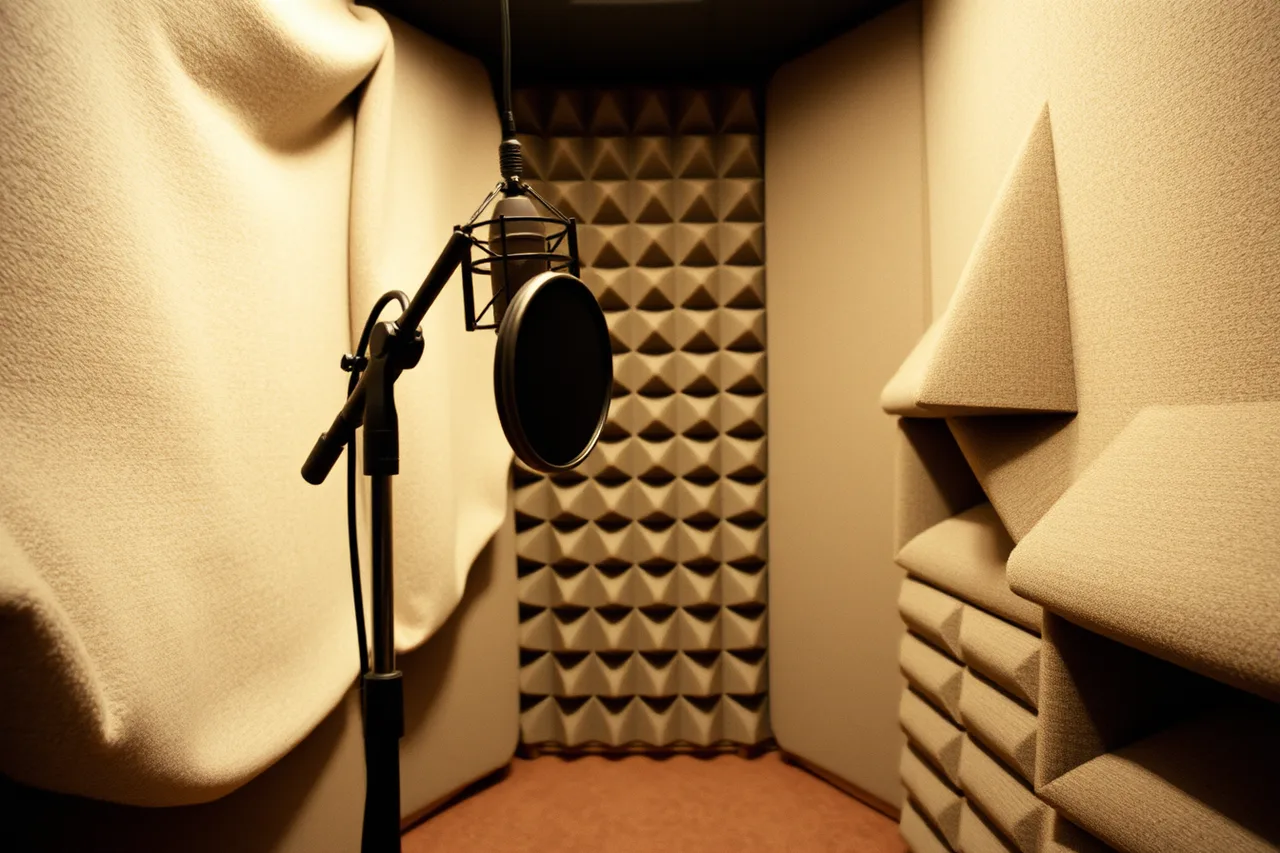
Treat the space before you upgrade the microphone. Bass traps in the corners and absorption at the first reflection points do more for a finished file than a microphone that costs twice as much. If the room rings, no microphone fixes it.
Hang absorption where sound first hits a hard surface: the wall in front of you, the ceiling above, and the wall behind the microphone. A rug over a hard floor helps too.
Commercial bass traps from GIK Acoustics or Auralex typically run $100 to $250 per panel. A do-it-yourself panel built from Owens Corning 703 or Rockwool Safe'n'Sound and a wood frame typically costs $50 to $90 in materials. Moving blankets sell for $20 to $40 each at a hardware store.
The chain by name: microphone, interface, headphones, DAW
Here is the equipment a working narrator runs. Prices are typical US street prices as of 2026, before sales.
The chain by name
| Piece | What it is | Typical US price | Why it is on the list |
|---|---|---|---|
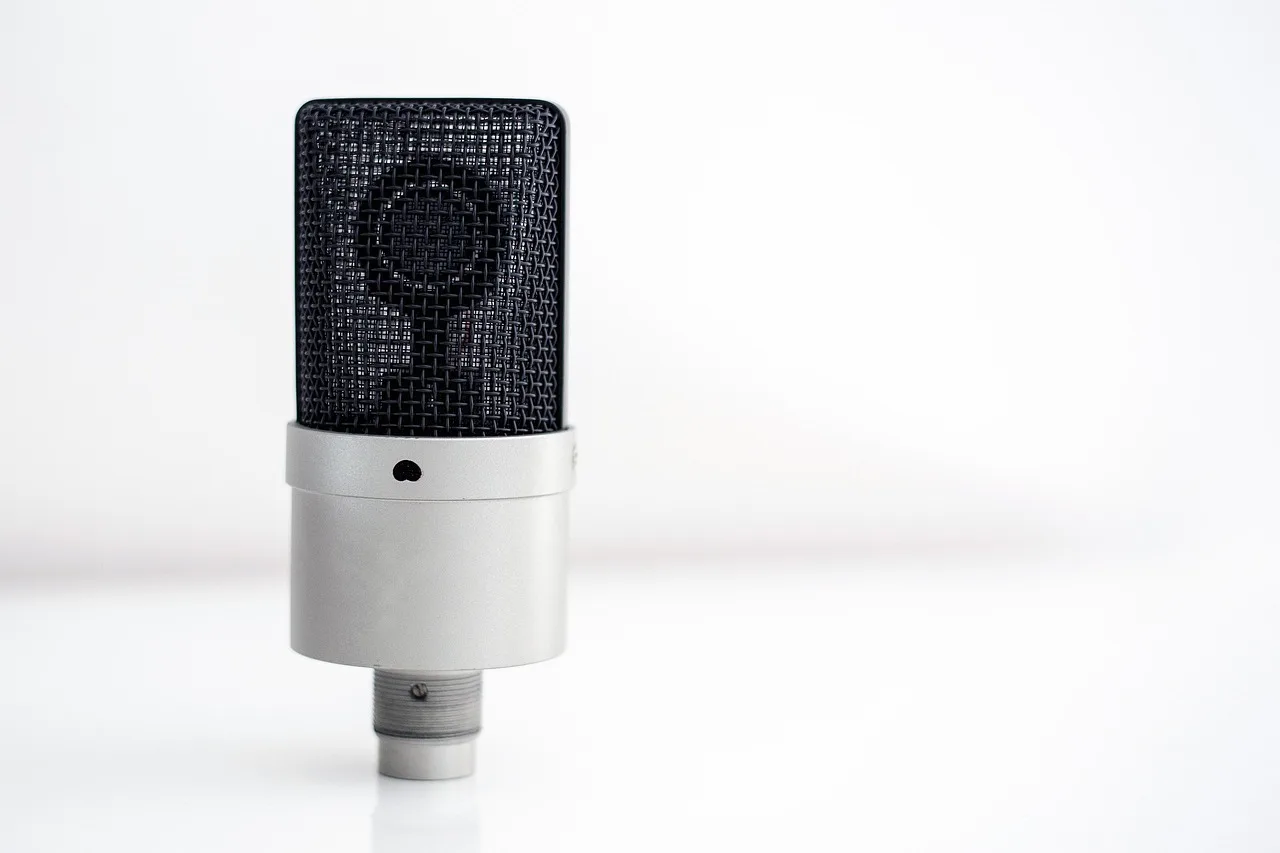
| Audio-Technica AT2020 or Rode NT1 | Large-diaphragm cardioid condenser | About $99 for the AT2020, about $269 for the NT1 | Low self-noise, honest midrange, the entry point most narrators start on |
| Shure SM7B or Electro-Voice RE20 | Dynamic broadcast microphone | About $399 for the SM7B, about $449 for the RE20 | Rejects room noise, forgiving in an untreated space |
| Focusrite Scarlett 2i2 or Audient iD14 | Two-input USB audio interface | About $199 for the Scarlett, about $299 for the iD14 | Clean preamp, headphone monitoring, room to add a second mic |
| Sony MDR-7506 or Beyerdynamic DT 770 Pro | Closed-back headphones | About $100 for the MDR-7506, about $169 for the DT 770 Pro | Closed cups keep the click track out of the microphone |
| Reaper, Adobe Audition, Audacity, Twisted Wave | Digital audio workstation | $60 for a discounted Reaper license, about $23 a month for Audition, free for Audacity, about $80 for Twisted Wave | Editing, punch-and-roll, batch rendering, and delivery formats |
| Pop filter and boom arm | Accessory | About $15 to $60 for the filter, $30 to $100 for the arm | Keeps plosives off the capsule and the mic off the desk |
| Shock mount | Accessory | About $20 to $50 | Decouples the microphone from desk bumps and keystrokes |
Buy the microphone for your room, not for a spec sheet. A condenser rewards a treated space. A dynamic microphone such as the Shure SM7B tolerates an untreated one.
A microphone on the same desk as your keyboard picks up every keystroke, so the mount and the arm matter as much as the capsule.
A first setup typically totals $550 to $1,200 for microphone, interface, headphones, boom arm, and pop filter.
Software and workflow
Pick one DAW and learn its punch-and-roll. Reaper costs $60 for a discounted license or $225 for a commercial one, and it is scriptable. That suits narrators who deliver hundreds of files a month.
Adobe Audition comes with a Creative Cloud single-app plan at about $23 a month. Audacity is free and adequate for short-form work. Twisted Wave sells for about $80 and is quick on single-file narration.
The workflow that survives a deadline runs in five steps:
- Record at 24-bit with peaks around minus 12 dBFS, leaving headroom for processing.
- Capture 30 seconds of room tone at the head and tail of every session.
- Edit out breaths, mouth noise, and flubbed lines, then punch in pickups rather than re-reading the whole page.
- Apply a high-pass filter, a gentle compressor, and a limiter, in that order.
- Export raw and processed WAV files at the sample rate the client names, and label takes by script page.
Name files by client, project, and page so batch rendering and delivery stay predictable.
The voiceover production tools and quality guide walks through the processing chain in more detail.
Evidence to check before you buy
For claims you make about your own setup, the Federal Trade Commission advertising guide for small business sets the standard. A "broadcast quality" claim on your website has to be true and supported, and any testimonial you publish must reflect honest experience.
For the ergonomics of long sessions, OSHA safety management is the reference. A narrator who logs six hours a day at a desk faces the same repetitive-strain exposure as any other desk worker.
For music beds and licensed cues, the U.S. Copyright Office study of copyright and the music marketplace explains why a streaming subscription does not cover every use.
Public performance, synchronization, and master rights travel on separate paths. A music bed cleared for one project may not be cleared for the next. A single track cleared for a regional commercial typically runs from a few hundred to a few thousand dollars, depending on term, territory, and media.
Common questions
What microphone should a new narrator buy first?
A large-diaphragm cardioid condenser such as the Audio-Technica AT2020 or Rode NT1 is the standard starting point. Those typically sell for about $99 and $269.
If your room is untreated, a dynamic microphone like the Shure SM7B rejects more of the room and buys you time before you build a booth.
Do I need a treated room or a better microphone?
Treat the room first. Absorption and bass traps remove the reflection a client hears before they hear your voice. No microphone upgrade fixes a room that rings.
Which DAW do narrators actually use?
Reaper, Adobe Audition, Audacity, and Twisted Wave are the four that come up most often in narration work. Reaper costs $60 for a discounted license and $225 for a commercial one.
Pick the one whose punch-and-roll you can run without thinking, because editing speed protects your effective hourly rate.
What should I deliver to a client?
Deliver 24-bit WAV at the sample rate the client specifies, both raw and processed, with room tone at the head and tail. Label takes by script page so the editor can find a pickup without emailing you.
What does a starter setup cost?
Microphone, interface, headphones, boom arm, and pop filter typically total $550 to $1,200. Commercial acoustic panels add $100 to $250 each, and homemade ones cost $50 to $90 in materials.