Guides
Voiceover production workflow, one decision at a time
A voiceover production workflow runs from script and casting through recording, editing, mixing and delivery, with a named owner at each handoff.
What to take away
- The voiceover production workflow has six stagesscript, casting, recording, editing, mixing, delivery. Each ends in a file someone else can open.
- The booth, not the calendar, sets your capacity. A booked session blocks the room whether or not the client sends final copy.
- Casting decisions belong in writing before the sessionusage, territory, term, media, and whether the job is union or non-union.
- Every delivery needs a stated specsample rate, bit depth, file naming, and who approves the master.
- Track audition-to-booking ratio and repeat-client share monthly. They tell you whether the pipeline is healthy or just busy.
- Common room toolsPro Tools or Reaper for the edit, iZotope RX for repair, and Source-Connect or Cleanfeed for remote direction.
This article covers voiceover business operations, not individualized legal, tax, union, or vocal-health advice. Usage terms, contract language, and eligibility questions belong with an entertainment attorney, a CPA, or the union's contracts department.
Script and pre-production
The script arrives before anything else. Read it aloud once, cold. Mark what trips you: product names, numbers, foreign words, claims you cannot verify. Send those to the client as questions rather than guessing at pronunciation on the clock.
Script pre-production checks
- Read script aloud once, cold
- Mark product names and numbers
- Flag foreign words and unverified claims
- Send questions to client before recording
- Confirm approver and revision rounds
- Check if script changes are new session
Ask who approves the read and how many revision rounds the quote includes. A script that changes after you record is a new session unless the agreement says otherwise. Write both answers into the booking email.
For recurring clients, a content calendar keeps sessions from stacking in the same week. The voiceover content calendar guide shows how to spread bookings across a quarter.
Casting and booking
Casting matches a voice to the job's register, not to your own range. Casting directors, agents, and platforms such as Voices.com, Voice123 and Bodalgo submit talent; a producer or the client approves. Bodalgo charges talent a flat annual fee, while Voices.com and Voice123 take a commission on each booking.
Booking email essentials
- Media
- Territory
- Term
- Exclusivity
- Union or non-union status
Put the agreed usage in the booking email: media, territory, term, exclusivity, and union status. Settle that before the session, not after the invoice.
Union status changes the paperwork, not the microphone. SAG-AFTRA signatory obligations and Taft-Hartley eligibility are set by the union, so route those questions to its contracts department rather than deciding them yourself.
Recording in the booth
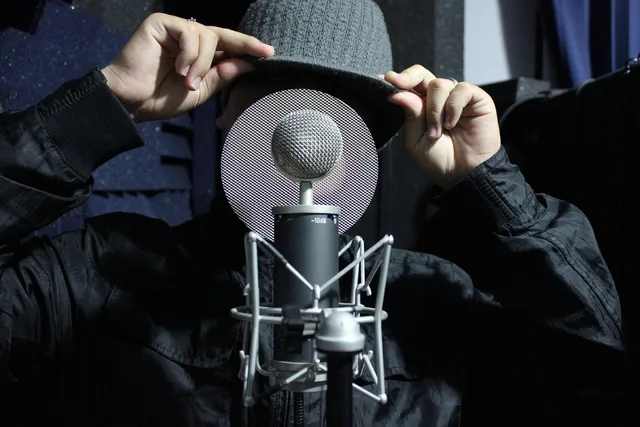
The booth is the constraint. One narrator, one microphone, one room: a session occupies that room for its full length, setup and pickup included. Two jobs cannot run in parallel.
Session length is a working number you set from experience, not a published standard. If your usable output is R finished minutes per hour and the job needs M minutes, the session runs M divided by R hours before editing.
Log every take. Say the slate out loud first, for example take 4, page 2, second paragraph, then clap once for the editor. A run formed to the wrong length is a return trip with a trailer.
When the client directs from another city, Cleanfeed, Source-Connect and ipDTL send full-bandwidth audio over the internet, so they hear the microphone feed instead of a phone call.
For the edit itself, Pro Tools is the studio standard. Reaper sells a discounted personal license for about $60 and a commercial one for about $225, while Adobe Audition ships inside Creative Cloud.
Editing, mixing, and delivery
Editing removes breaths, clicks, and false starts, and it fixes pacing. iZotope RX and the built-in tools in Pro Tools or Audition cover most repairs: De-click, De-noise, mouth-declick.
Mixing sets levels, noise floor, and loudness to the spec the client named. Ask for that spec in writing, because each buyer wants a different target:
- US broadcast commercials
- ATSC A/85, about -24 LKFS.
- European broadcast
- EBU R128, about -23 LUFS.
- Netflix original dialogue
- -27 LKFS, dialog-gated.
- Podcasts on Apple Podcasts and Spotify
- about -16 LUFS integrated, true peak at -1 dBTP or lower.
- Audiobooks for ACX and Audible
- MP3 at 192 kbps or higher, RMS between -23 dB and -18 dB, peak no higher than -3 dB.
Deliver the master plus a backup and a session archive. Name files the way the client's system expects, for example ClientName_Spot_60s_v2_master.wav, and state in the handoff email which file is the approved master. Say the revision count in the same email.
Rates and usage
Rates are quoted per finished minute, per word, or per session, and the number depends on usage. A buyout and a term-limited license are different products at different prices. Do not sign work-for-hire or buyout language without an attorney reviewing it in your jurisdiction.
Typical non-union ranges in most US markets, as of 2026: corporate narration and e-learning run about $200 to $500 per finished minute, and audiobooks run about $200 to $400 per finished hour. Union work pays from a published sheet. SAG-AFTRA's national commercial contract lists session fees plus usage, and the union updates its audiobook minimums periodically.
For audiobooks, royalty-share and per-finished-hour structures pay out on different schedules. ACX offers both: royalty share splits net earnings with no upfront pay, while per-finished-hour pays on delivery. Which one suits you depends on the title's expected sales, and that is a business judgment, not a rule.
Advertising claims and reviews
If you market your own services, the FTC advertising guide for small business sets the baseline: claims must be truthful and supported, and endorsements must reflect honest experience.
The FTC guidance on soliciting and paying for online reviews says review requests should go to genuine clients without cherry-picking the happy ones. Incentives must not create a misleading picture.
Music beds and licensed cues carry their own rights. The Copyright Office study on the music marketplace explains that performance and synchronization uses can follow different licensing paths, so a stock subscription may not cover every placement.
The working sequence
- Read the script cold and send pronunciation and claim questions back to the client.
- Confirm usage, media, term, and union status in the booking email before the session is held.
- Block the booth for the full session, including setup and pickup, and slate every take.
- Edit in Pro Tools, Reaper or Audition, repair with iZotope RX, then mix to the client's stated loudness and format spec.
- Deliver the approved master, a backup, and the session archive with a named approver and a revision count.
Common questions
Who owns the recording after delivery?
It depends on the agreement. A buyout transfers rights; a term-limited license does not. Read the language with an attorney before you sign.
How do I price a job with no published rate?
Build it from your own numbers: session hours, edit hours, and the usage the client wants. Quote per finished minute once you know your ratio.
What if the client changes the script after recording?
Treat it as a new session unless your quote included a set number of revision rounds. Say so in writing before you start.
How do I know the pipeline is working?
Watch audition-to-booking ratio and repeat-client share. Rising auditions with flat bookings means the demo or the targeting is off, not the effort.