Guides
Which markets actually fit a growing voiceover business
Voiceover work travels by file, so market choice turns on client density, union presence, studio access, and local ad spend, not on where you live.
What to take away
- Voiceover work travels as files, so you can book a job in a market you do not live in. The market still decides who you can meet, audition for, and invoice.
- Five markets hold enough client density to sustain a growing voiceover business: Los Angeles, New York, Chicago, Atlanta, and Nashville.
- Four more fit narrower specialtiesBoston, Seattle, Washington, and Miami.
- A market earns a place on your list when it holds at least two of: ad agencies, union signatory shops, audiobook publishers, game studios, or dubbing houses.
- Cost of living is a business input, not a verdict. Compare it against the rate card the market will actually pay.
- Confirm licensing, tax registration, and union terms with your state, a CPA, and the union's contracts department before you commit.
Why the map matters less than it used to
A narrator records in a booth and sends a file. The client can sit anywhere. That does not make location irrelevant, because the people who hire narrators still cluster, and those clusters set rates, session terms, and how fast a second booking arrives.
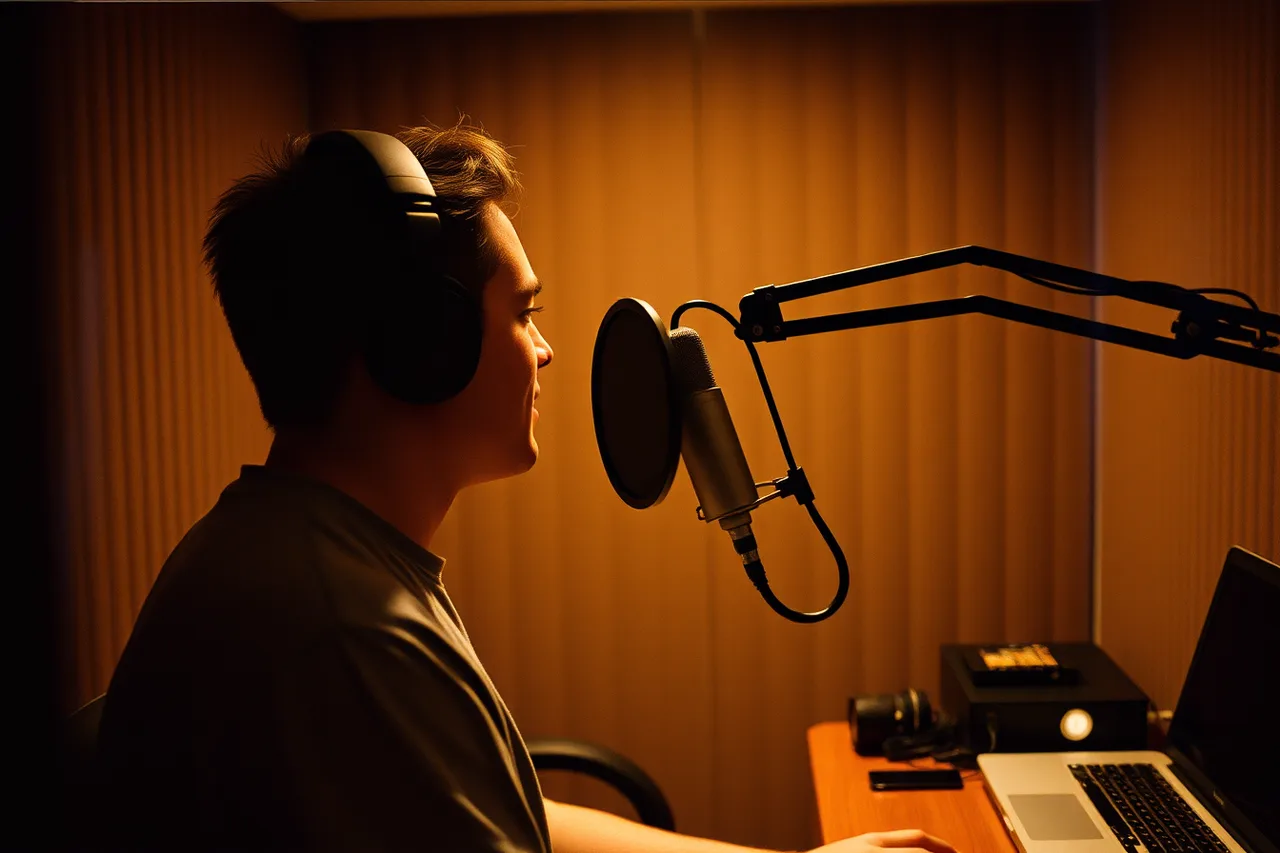
What a market gives you is access: casting directors who know your name, studios you can drive to for a directed session, and a local rate card you can quote without guessing.
Five markets that fit a voiceover business
Los Angeles. The country's largest cluster of ad agencies, animation studios, and game developers. Warner Bros. Animation and Nickelodeon Animation Studio work out of Burbank, and Riot Games and Naughty Dog sit on the west side.
Suits narrators chasing commercial, promo, and interactive work. Rates run high and competition is heavy. Union signatory work is common, so SAG-AFTRA eligibility questions come up early. A directed session in a mid-size studio typically rents for $150 to $300 an hour.
New York. Advertising, publishing, and network audio sit in the same few square miles. Penguin Random House, Hachette, HarperCollins, Simon & Schuster, and Macmillan keep editorial offices in Manhattan. Audible is headquartered across the Hudson in Newark.
Strong for audiobooks, corporate narration, and network promo. Publishers here commission long-form, which favors narrators who can hold a per-finished-hour schedule. Non-union audiobook narration typically pays $100 to $400 per finished hour, and SAG-AFTRA signatory titles pay more under the union rate card.
Chicago. A commercial hub with a smaller, steadier pool of agencies. Leo Burnett, FCB Chicago, and Havas Chicago keep production calendars moving, and corporate and industrial narration makes up much of the local volume.
Suits narrators who want commercial volume without Los Angeles audition pressure. Studio rentals run below coastal rates, typically $75 to $150 an hour.
Atlanta. Film, television, and a fast-growing game and post-production sector. Tyler Perry Studios, Cartoon Network, and Adult Swim are based in the city, and Hi-Rez Studios works out of Alpharetta.
Suits narrators building credits in animation and interactive, often at rates below the coastal markets. Georgia's film tax credit pays 20 percent, with an uplift to 30 percent for qualifying productions. That credit keeps crews and post houses in state.
Nashville. Audio production and music licensing, with a dense independent studio scene. Blackbird Studio, Ocean Way Nashville, and The Castle Recording Studios book voice sessions, and HarperCollins Christian Publishing keeps audiobook work in town.
Suits narrators working in music-adjacent content, audiobooks, and regional commercial. Studio time typically runs $75 to $150 an hour. Music Row holds offices for Universal Music Group Nashville and Sony Music Nashville.
Four more markets with a narrower fit
Boston. Higher education and health care fund e-learning, medical, and training narration. Harvard, MIT, Boston University, and Mass General Brigham generate scripts few other cities can match.
Seattle. Tech and games drive the work. Microsoft and Amazon run internal production teams, and Nintendo of America and Valve are based in the region. Narration here leans explainer and game character.
Washington. Public media, advocacy, and political advertising. NPR, the Voice of America, and Warner Bros. Discovery's Silver Spring office put news and documentary narration within driving distance.
Miami. Spanish-language broadcasting and dubbing. Telemundo and Univision are headquartered in the area, and local dubbing houses serve Latin American broadcasters.
Outside these markets, a city can still work if it holds a specific client type you serve. A city with one large audiobook publisher can beat a larger city with none.
What to check before you move or expand
| Check | What it tells you |
|---|---|
| Agency and studio count | Whether auditions will come to you or you will chase them |
| Union signatory density | Whether union work is available or rare. SAG-AFTRA keeps locals in Los Angeles, New York, Chicago, Atlanta, and Nashville |
| Audiobook and game publisher presence | Whether long-form or interactive work exists locally |
| Studio rental rate | Your cost for directed sessions you cannot do from home, typically $75 to $300 an hour |
| State LLC fee and registration | Your fixed annual cost of doing business. California adds an $800 minimum franchise tax, New York's LLC publication rule often costs $1,000 or more downstate, and Georgia charges $100 to form plus $50 a year |
| Effective hourly after expenses | Whether the local rate card clears your break-even |
The arithmetic is yours to run: take your target annual income, divide by your realistic billable hours per week times working weeks, and compare that figure to the rate card the market pays. If the market rate sits below your break-even, the market is not a fit yet.
The SBA business guide covers market research, startup costs, permits, and insurance in one place, which is the right order to work through before committing to a new city.
Where the rules come from
Broadcast and studio work carries setup, monitoring, and troubleshooting duties. These duties vary by production. The BLS summary for broadcast, sound, and video technicians describes how schedules and environments differ across settings. That variability is why a market's studio infrastructure matters as much as its client list.
Music use is a separate rights question from narration. The U.S. Copyright Office study on copyright and the music marketplace explains that public performance and other uses can run through different rights and licensing paths.
A subscription or a venue arrangement does not cover every use. If a project pairs your voice with music, the client's license is not yours to assume.
Common questions
Do I have to live in one of these markets?
No. Most narration is delivered remotely. Living in a market helps you attend directed sessions, meet casting directors, and hear about work before it is posted. Treat the list as access, not as a requirement.
Which market is best for audiobooks?
New York has the deepest publisher concentration, and Nashville has a strong independent studio scene plus HarperCollins Christian Publishing. The better test is whether a publisher in that market commissions the genre and length you narrate well.
Which of these markets costs least to enter?
Atlanta and Nashville. Georgia charges $100 to form an LLC and $50 a year after that. Tennessee's LLC filing fee starts at $300, and its annual report starts at $300 too. Studio time in both cities typically runs $75 to $150 an hour.
How do I check a market before moving?
Count the agencies, studios, and publishers within driving distance. Price a month of studio rental. Then compare the local rate card to your break-even figure. If the numbers do not clear, the market is not ready for you yet.
What should I not decide from this article?
Anything about contract terms, buyouts, work-for-hire language, tax positions, or union eligibility. Those depend on your jurisdiction and your agreement. Ask an entertainment or intellectual-property attorney, a CPA familiar with Schedule C, and the union's contracts department.